Reading time
7 Minutes
Date
Basing a Family Near the Imperial Palace During KIS Summer Camp
A three-bedroom house in Kamigyō, minutes from the Imperial Palace and in the same district as Kyoto International School, built for families staying several weeks for the KIS summer camp.
By Icy, Founder & CEO of The081
Licensed Real Estate Broker (License No. 15131) | Operating in Kyoto since 2019
TL;DR
The house sits in Kamigyō, about a two-minute walk from the Kyoto Imperial Palace and the Gyoen garden, in the same district as KIS.
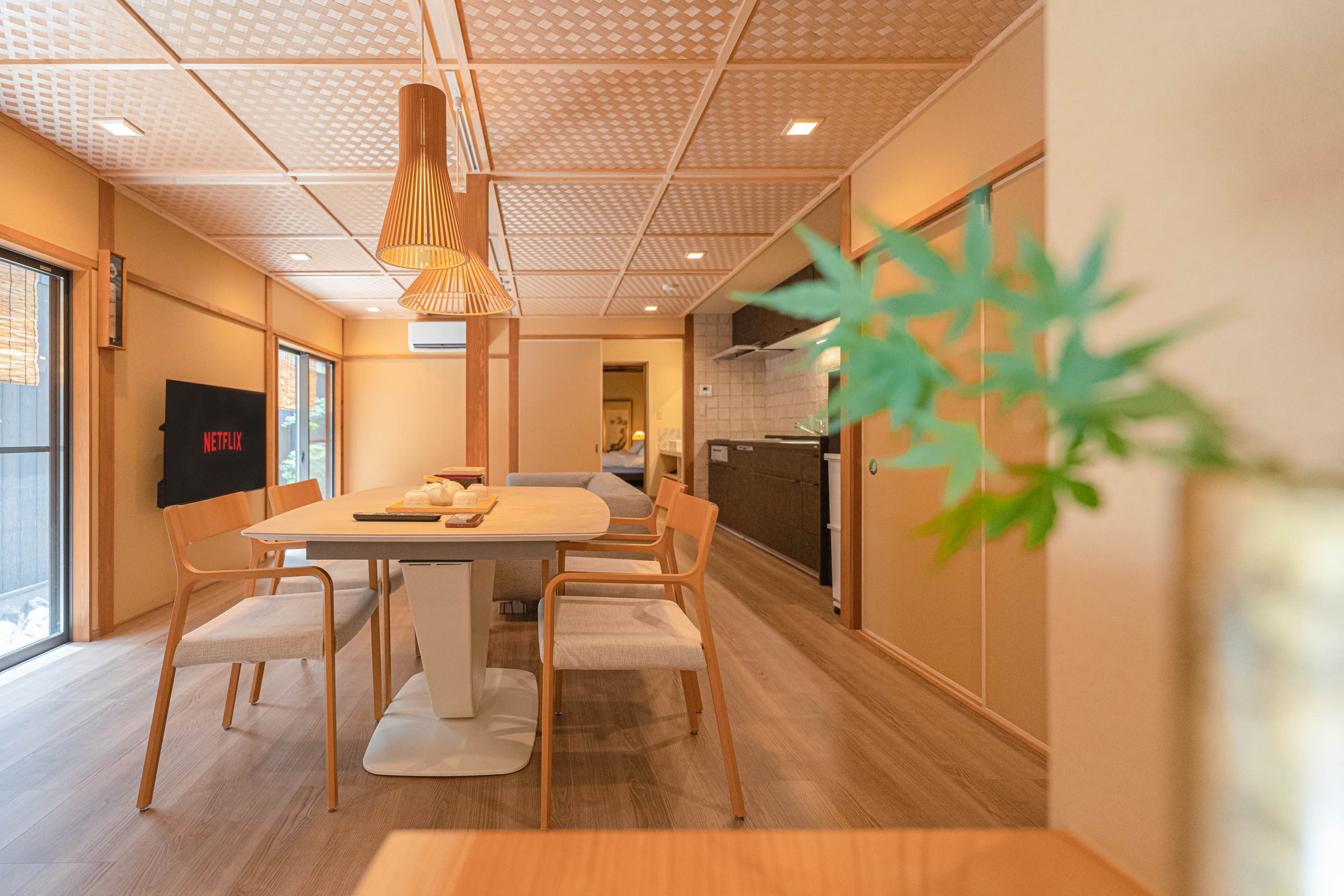
Three bedrooms sleep up to eight, with two bathrooms, three separate toilets and a full living and dining room, built for a family staying weeks rather than nights.
Imadegawa and Marutamachi stations on the Karasuma line are within walking distance, putting Arashiyama, Nara and Osaka within easy reach on weekends.
The house operates as a 180-day Minpaku under Japan's Housing Accommodation Business Act, so its legal operating nights are capped and the summer weeks fill early.
A full kitchen, whole-house air conditioning, a washing machine and laundry essentials make ordinary daily life manageable through a humid Kyoto summer.
Around March each year, a familiar email lands in our inbox. A child has a place at the KIS summer camp, the family will be in Kyoto for three or four weeks in July, and they want to know where to stay. Most have already looked at hotels near Kyoto Station or Gion and found the rooms too small for a family, the monthly cost steep, and the location on the wrong side of the city from the school. A camp stay is not a sightseeing trip; it is several weeks of ordinary life in an unfamiliar city, and that changes what you need from a place to stay.
The requirements are practical. You want a quiet base where children can leave calmly in the morning and sleep early at night, a kitchen that can handle breakfast before camp and dinner after, a washing machine for children who come home grubby every day, and separate bedrooms so that parents and children keep their own hours. Kyoto summers are hot and humid, so air conditioning is a baseline rather than a bonus. Set those needs side by side and most families move their search away from Higashiyama toward Kamigyō and the streets around the Imperial Palace, which is exactly where this house sits.
A quieter side of Kyoto
Many visitors know only the Kyoto of Kiyomizu-dera and the crowded lanes of Gion, but Kamigyō is a different city. This is settled, residential old Kyoto, where local families have lived for generations, the streets stay calm, and you hear cicadas in the morning rather than rolling suitcases. The Kyoto Gyoen sits at the doorstep, a large national garden with gravel paths, old trees and open ground, where children can run before camp and unwind in the evening. You live as a resident here, not as a tourist passing through.
Everyday supply is close at hand. The neighbourhood has proper supermarkets, bakeries and a few local cafés, so cooking, shopping and the small daily errands are simple rather than an expedition. The streets are quiet enough that children can move around the area without a parent on constant alert. For a family settling in for weeks, that unremarkable convenience is the part that matters most.
Getting around is straightforward. Imadegawa and Marutamachi stations on the Karasuma line are within walking distance and connect cleanly to the centre and onward across Kansai. Kyoto is flat, and this district in particular rewards cycling; for the school run and weekend outings a bicycle is often easier than the train, and our sister brand w2go can arrange rentals if you want them. For the further sights such as Arashiyama or Nara a taxi is the simplest option, as the listing notes, but daily camp life rarely calls for one.
A house that holds up to weeks of family life
A night and a month are two different standards. A short stay is about the bed and the location; a long one is about whether the place lets a family live normally. The kitchen here is complete, with a dishwasher, microwave, refrigerator, kettle and coffee maker, so cooking breakfast before camp, putting together dinner afterwards and managing fussy eaters are all straightforward. For families who care about food or want to keep the budget in check, cooking for yourselves adds up to real savings over several weeks.
The layout is arranged for a long stay rather than a quick one. Three bedrooms and a separate living and dining room give parents and children their own corners, so children can sleep early while the adults stay up to deal with work. Two bathrooms and three separate toilets mean eight people are not queuing on a camp morning, and the washing machine earns its keep daily with children who come home covered in dust and sweat. Two Dyson hair dryers are the kind of small detail you only appreciate once you have moved in. The full specification and photographs are on the Kyoto Imperial Palace House listing.
Kyoto summer deserves its own line. July and August are humid and genuinely hot, so whole-house air conditioning is a precondition for living comfortably, and the house is equipped for it. The underfloor heating goes unused in summer, but for a family considering a long spring, autumn or winter stay it becomes another point in the property's favour. That is the advantage a whole house holds over a hotel room: it works across the seasons, not for one of them.
Summer dates and the reality of a 180-day Minpaku
One point should be clear from the start. The house operates as a Minpaku under Japan's Housing Accommodation Business Act, the arrangement commonly called a 180-day Minpaku, which caps the number of nights it may legally trade in a year. In practice it cannot open every night the way a hotel does, so the available nights have to be allocated across the calendar with some care. The framework itself, and how we manage it, is set out on our 180-day Minpaku operations page.
The KIS camp falls in July and August, which is also the hottest and busiest stretch of the Kyoto year. Whole houses across the city book out early in those weeks, and a three-bedroom property near the Gosho that sleeps eight tends to go earlier still. If your child's camp dates are settled, the sensible move is to lock the stay months ahead rather than in the final weeks, by which point the choice is usually thin.
On the practical side, we have handled a good number of these multi-week family stays, and we set up check-in, mid-stay cleaning and any ad hoc requests in advance, with someone on the ground in Kyoto who can respond rather than an email thread running across time zones. You can book the house through the Airbnb link on the listing; for a multi-week stay, or if you are still comparing a few properties, it is easier to contact us directly so we can match dates and needs first.
FAQ
Which part of Kyoto is easiest to stay in during the KIS summer camp?
The area around the school, in Kamigyō near the Imperial Palace, is the practical choice. It is quiet, well supplied for daily life and close to the campuses, which keeps the school run short and calm compared with staying among the crowds in Higashiyama or by Kyoto Station.
For several weeks with children, is a house better than a hotel?
For a three or four week stay, a whole house is almost always the better fit. You need a kitchen, a washing machine and separate bedrooms, which hotels generally cannot offer, and across a month a single house sleeping eight usually costs less than several hotel rooms.
How far is the house from KIS?
The KIS Juraku campus (the primary school, ages 3–12) is about a five-minute walk from the house, and the Taiken campus (ages 12–16) is roughly fifteen minutes on foot or a few minutes by bicycle. Both sit in Kamigyō near the Kyoto Gyoen, and we can confirm the exact route and time for the campus your child will attend.
How far ahead should I book the house for summer?
Book as soon as the camp dates are fixed, ideally several months out. July and August are Kyoto's peak, and because this is a 180-day Minpaku with a limited number of operating nights, the options thin out quickly if you wait until close to the holidays.
We don't speak Japanese. Will communication be a problem?
No. We support guests fully in English, Chinese and Japanese, from booking and check-in through anything that comes up during the stay, so you can deal with us in the language you are comfortable in.
Once the camp dates are set, the place to stay is worth settling early too. Rather than picking through whatever is left close to the date, let us check whether the weeks line up and whether this house suits your family, and decide once that is clear. When you are ready, tell us your dates and party size and we will take it from there.